Why it exists
Built by a caregiver.
Not a company. The context the demo alone can't carry — why respite fails, and what Handoff does about it.
About the founder
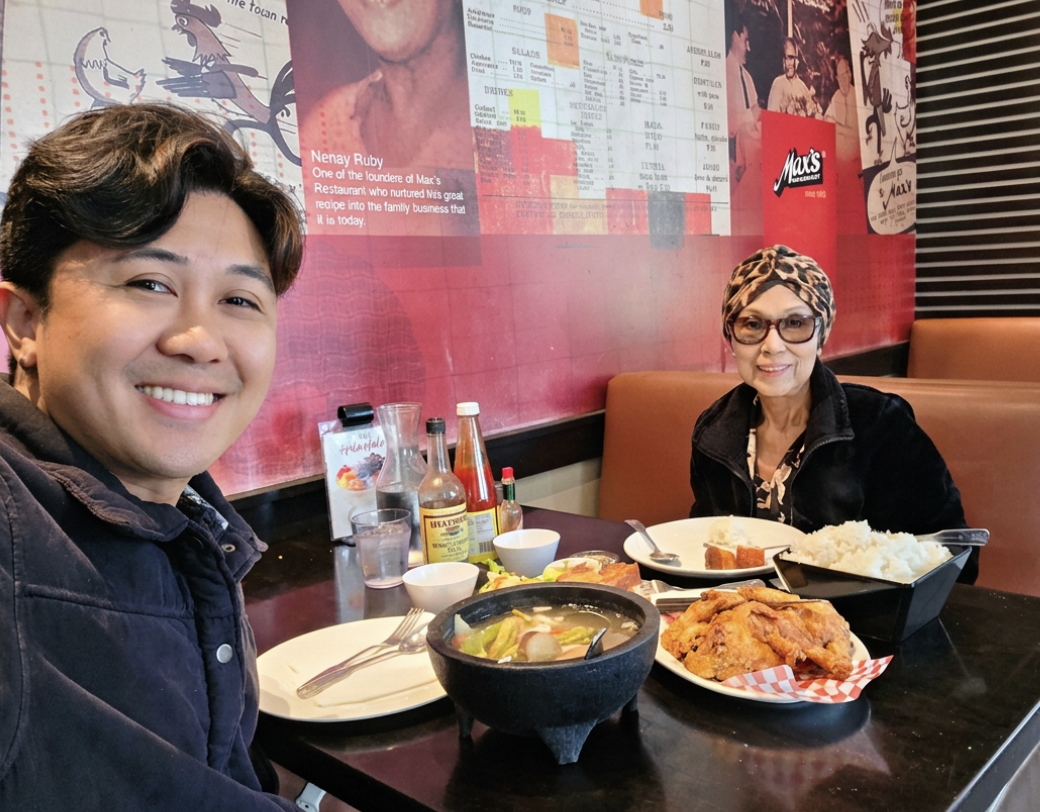
I'm Joël — a UX designer who became, almost overnight, a full-time family caregiver for both of my parents. My mom, Lea, is living with advanced cancer; my dad's needs are entirely different. Two people, two conditions, one home. For nearly two years, I haven't taken a single real break — because when someone's life depends on the details, you become the one person who can never step away.
I'm a first-generation college graduate and Filipino American, from a multigenerational Bay Area household — so I navigated doctors and paperwork for parents the system wasn't built for. For a lot of Filipino families, including mine, you don't send your parents somewhere — you become the somewhere.
Every "you should take a break" ended the same way: it was easier to stay than to explain everything. As a designer, I did the only thing I knew how to do — I mapped a full shift from both sides, and found it breaks in the same place every time.
Not the routine. The exceptions.
So I built the tool I needed: a way to hand someone what I know, in my own words, so help can actually help.
Before Handoff, I won Grand Prize in the 2024 Long COVID Healthathon by HHS — an earlier, separate project. I hold a B.A. in Sociology from UC Berkeley and IHSS paramedical certification for the care I provide at home. Before design, I worked in education—translating complicated things into plain language is the oldest skill I have, and it's the same work Handoff does for a caregiver.
The problem
Most family caregivers don't lack helping hands. They lack a way to hand off what lives only in their heads — which medication at which time, the early sign of agitation, the fact that today is different because she barely slept. That transfer is hard, rushed, and almost always unplanned, so the break that was available goes unused.
- 63M
- Americans — nearly 1 in 4 adults — provide unpaid care for a loved one.
- 85%
- of family caregivers never use formal respite services.
- 2030
- 1 in 6 people worldwide will be 60 or older — and their care will land where it always has: on family.
It's easier to do it myself than to explain everything.
The routine hands off; the responsibility never does. Handoff treats trust as what it concretely is — an information-transfer problem — and solves that part with technology.
Sources: Utz, J Am Med Dir Assoc, 2021; ACL, 2022 National Strategy to Support Family Caregivers; WHO, Ageing and health.
What Handoff does
Handoff turns a few minutes of speaking or typing into a clear, caregiver-approved brief for whoever is stepping in. The AI structures a tired stream-of-consciousness into a scannable page, pulls what's different today to the top, and prompts for the gaps a rushed caregiver leaves. Because our house holds two different conditions, Handoff was built diagnosis-agnostic from the first sketch.
It never asserts a medical fact of its own. Nothing is shared until the caregiver reviews and approves. The brief arrives as a no-install web link on an ordinary phone.
Hand off the care, not the worry.